Found a can of this at C.A.N.:
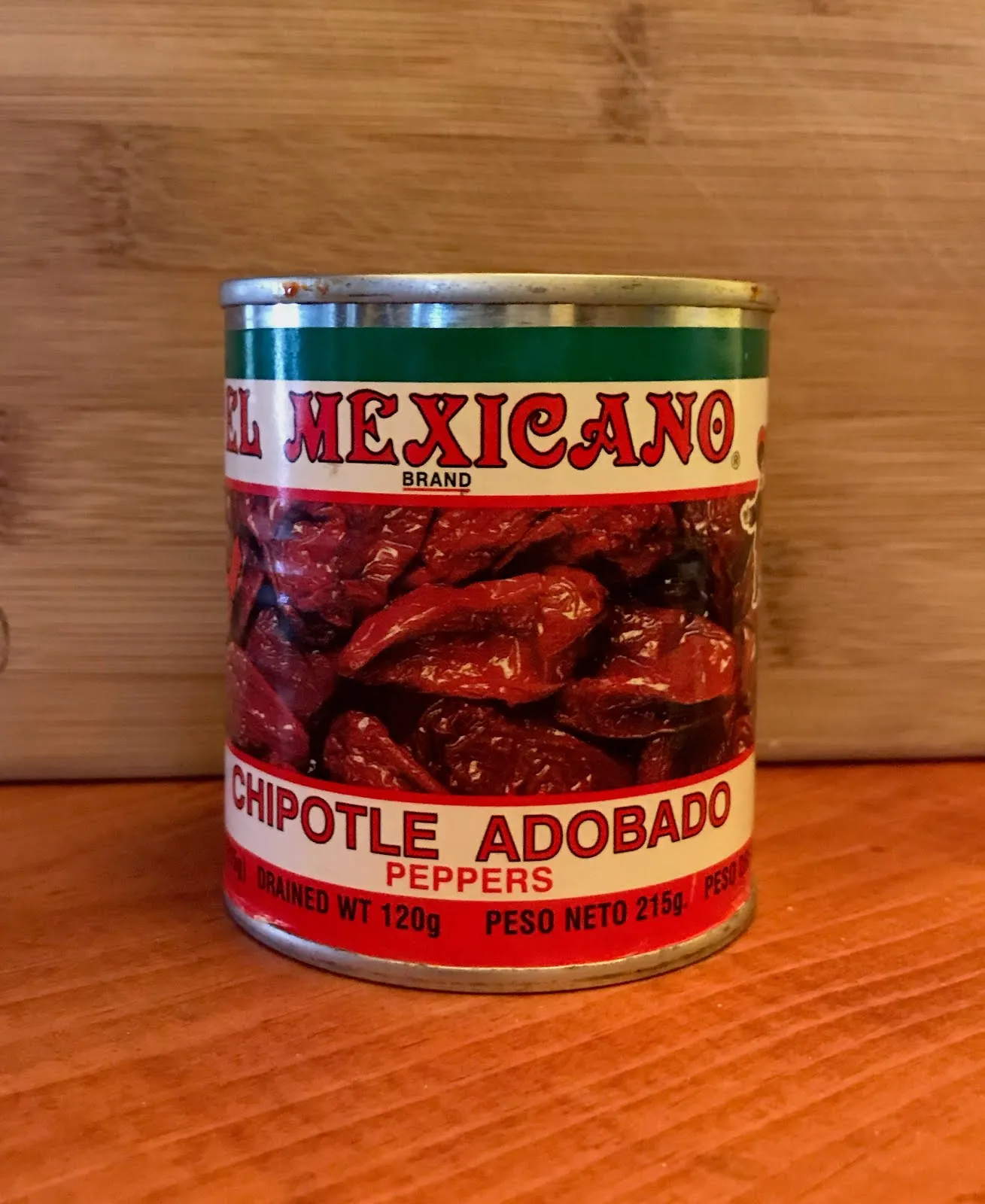
It’s delicious, smoky, and hot, man! I’ve been adding it to spice up my fixin’s and I’ve learned to moderate it.
Chipotles are smoked jalapeno peppers. The adobo sauce usually includes the following ingredients:
cumin, paprika, coriander, fennel, yellow mustard, garlic, onion, ancho, pasilla and Mexican oregano.
In case you want to geek out on it, here’s some background info on Chipotle Adobado
Chipotle, which comes from the Nahuatl word “chilpoctli” with “chil” meaning chile pepper and “poctli” meaning smoked (was originally “pochilli”). Morita means “small blackberry” in Spanish.
The ancient civilization of Teotihuacan was the largest city/ state in Mesoamerica (located north of modern day Mexico City). The original habitants of Teotihuacan smoked chiles hundreds of years before the Aztecs (1345-1521) did. This “smoke drying” process was initially used for drying meats but they found that smoking allowed the chiles to be stored for a long period of time. Teotihuacan is actually the Aztec name for the city, which translates to “Place of the Gods” as the original name has not been deciphered from surviving name glyphs (unique marks that collectively add up to the spelling of a word) at the site. Chile historians believe that the Aztecs also smoked jalapeno peppers because the fleshy, thick walls of the jalapeno were often difficult to dry in the sun and tended to rot.
Jalapeños are named after the town of Xalapa (often spelled as Jalapa) in Véracruz State (although no longer commercially grown there), and are also known by the names cuaresmeños, gordo or Lenten chiles. In Veracruz jalapenos are called “chiles gordos”, in Puebla and Oaxaca they’re are called “huachinangos”. In its dried form, the traditional chipotle chile (known as chipotle “meco”) is a dull tan to deep coffee brown in color with a wrinkled, ridged surface. It is usually 2” to 4” long and 1” wide, with a medium thick flesh.
A Spanish friar living in Mexico in the 1500s wrote of a dish he ate in Cholula (modern day Puebla) called “teatzin” which had a sauce made from chipotle and pasilla chiles that was used to stew Lenten palm flowers and fresh jalapeno chiles.
After the fall of the Aztec Empire (1345-1521), smoked chiles were found mostly in central and southern Mexico markets of Chiapas, Oaxaca, Puebla and Veracruz.
*(from spicesinc.com) *