Let me be honest about something up front: I’m not really a piano student.
I’m a keyboard student. There’s a difference, and it matters.
When people picture someone learning piano, they imagine a bench, a weighted action, maybe a metronome, and a lot of Chopin études. That world is real and I respect it completely. But it’s not what draws me. What draws me is the electronic keyboard — the synthesizer, the workstation, the instrument that can sound like anything and sometimes sounds like nothing you’ve heard before.
The keys are the same 88 notes. Everything else is negotiable.
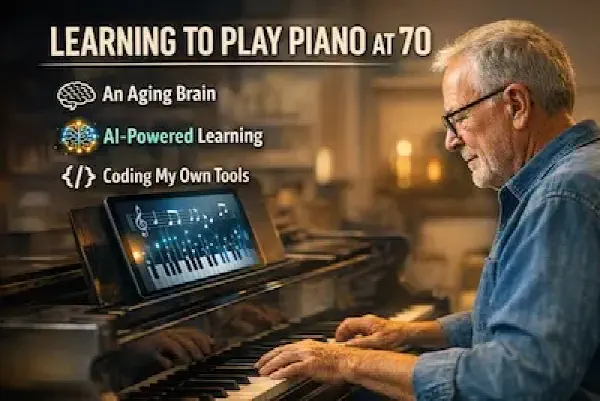
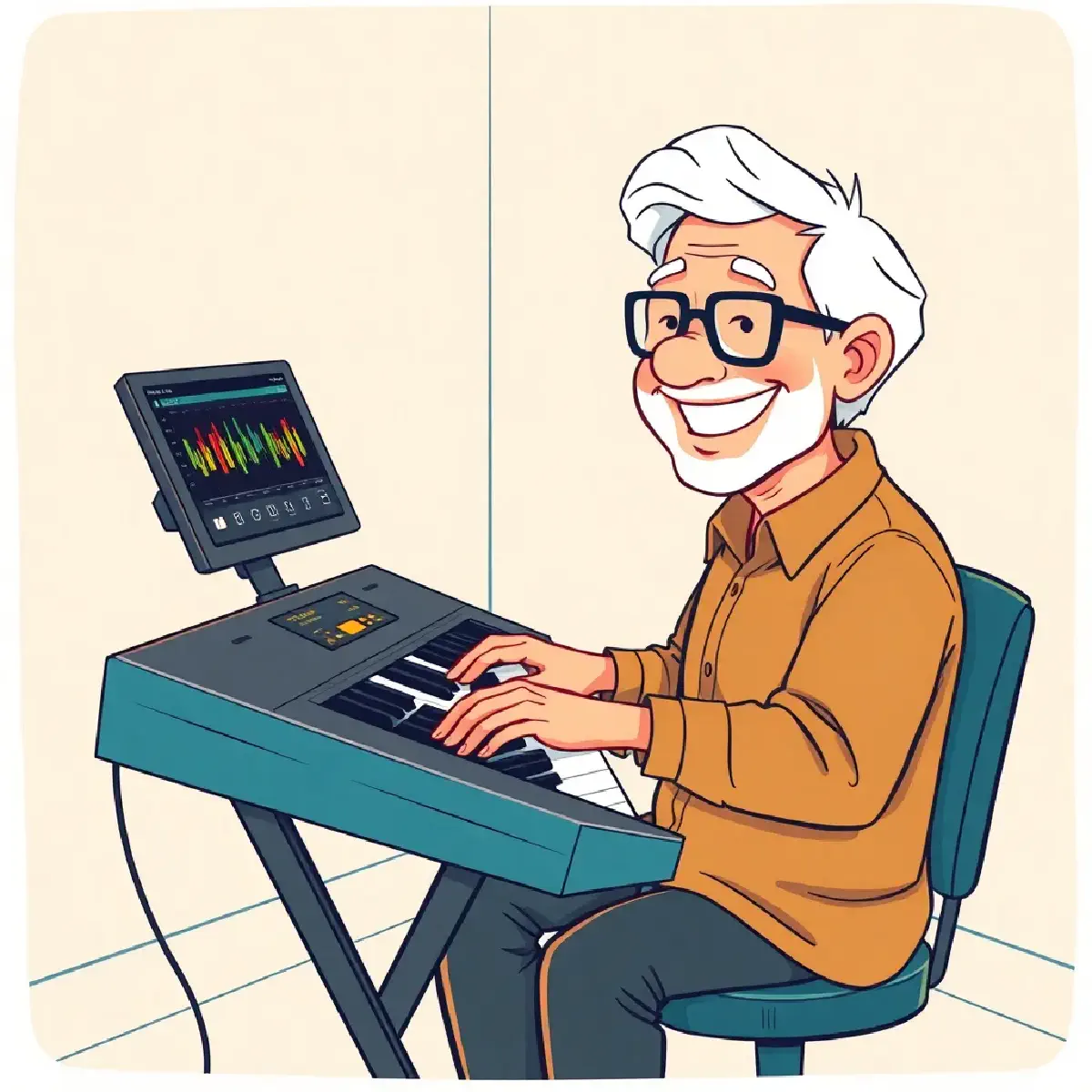
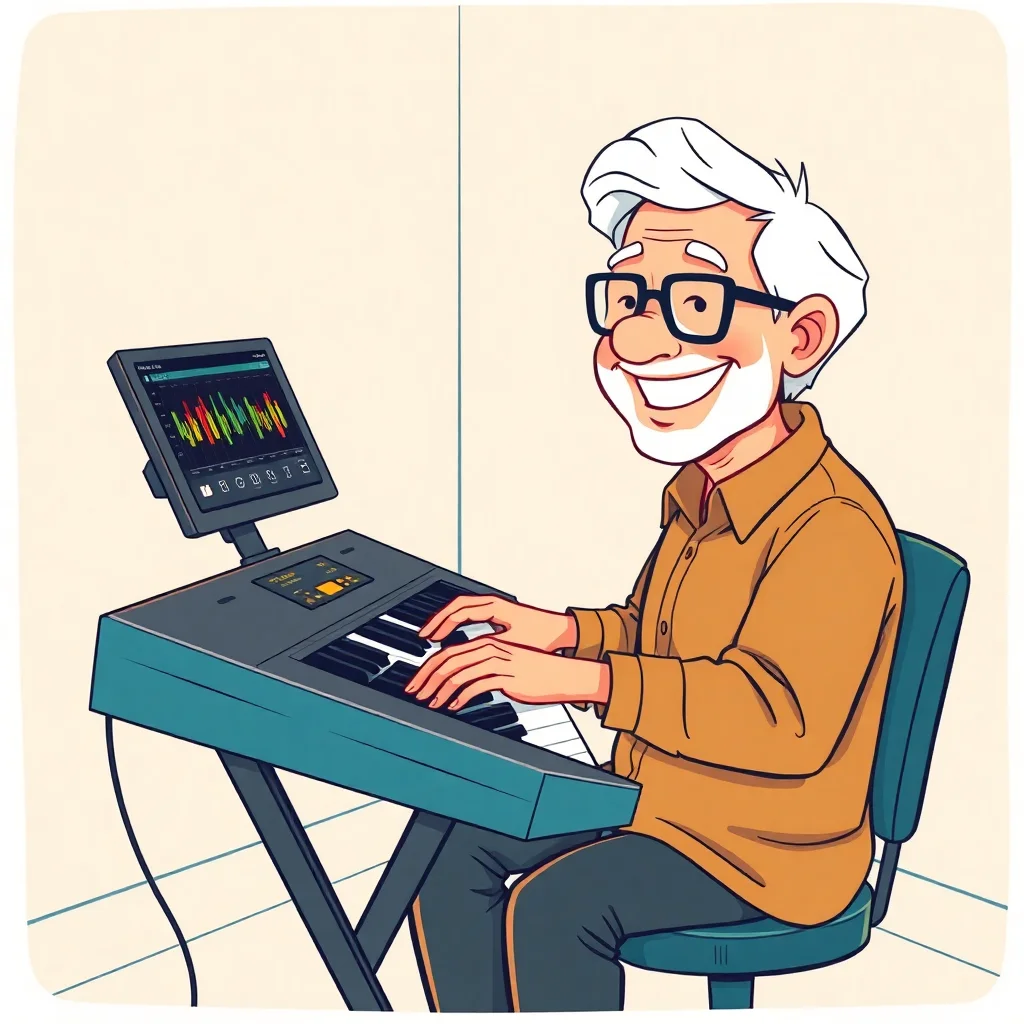
That openness is exactly what I find compelling. A traditional piano is one instrument doing one thing extraordinarily well. A keyboard is a platform. And lately I’ve been taking that idea further by mounting an iPad directly to the keyboard stand — running apps that add sound effects, loops, and layers that respond to what I’m playing.
That’s where it gets interesting. And harder.
The moment you attach the iPad, the keyboard stops being the instrument. The combination becomes the instrument. Triggering a loop at the right moment, building a layer, knowing when to let something run and when to cut it — that’s a second layer of decision-making happening simultaneously with the playing itself. Coordination, timing, musical judgment, all at once.
Most people would call that a complication. I call it the point.
I’ve always been more interested in the edge of what I can do than the comfort of what I already can. At 70, that instinct hasn’t changed. If anything, the stakes clarify things. There’s no time to spend months getting comfortable before introducing complexity. Just dive in, make a mess, learn from it.
The iPad is staying on the stand.