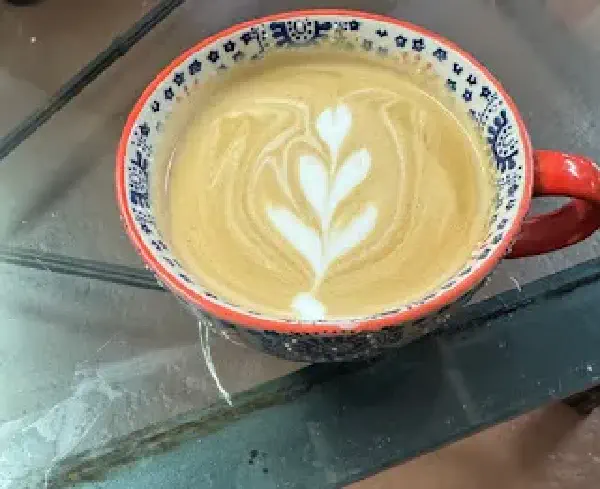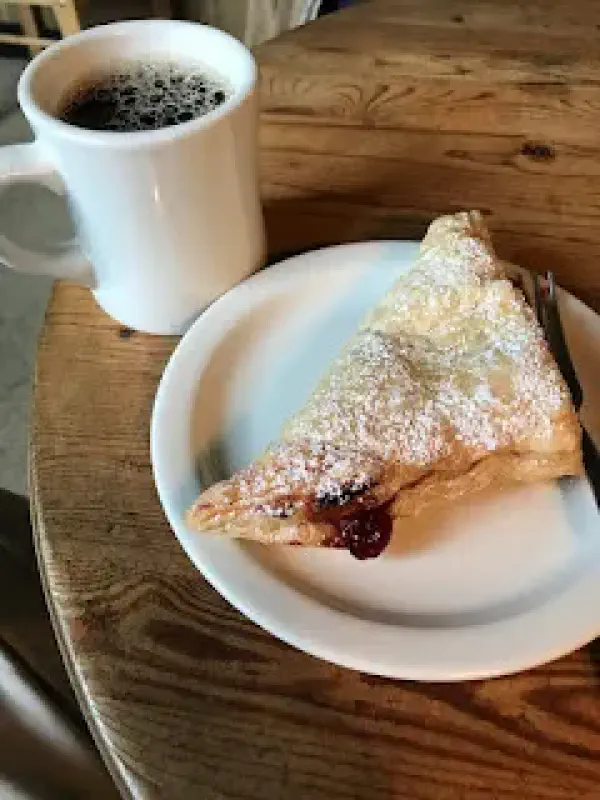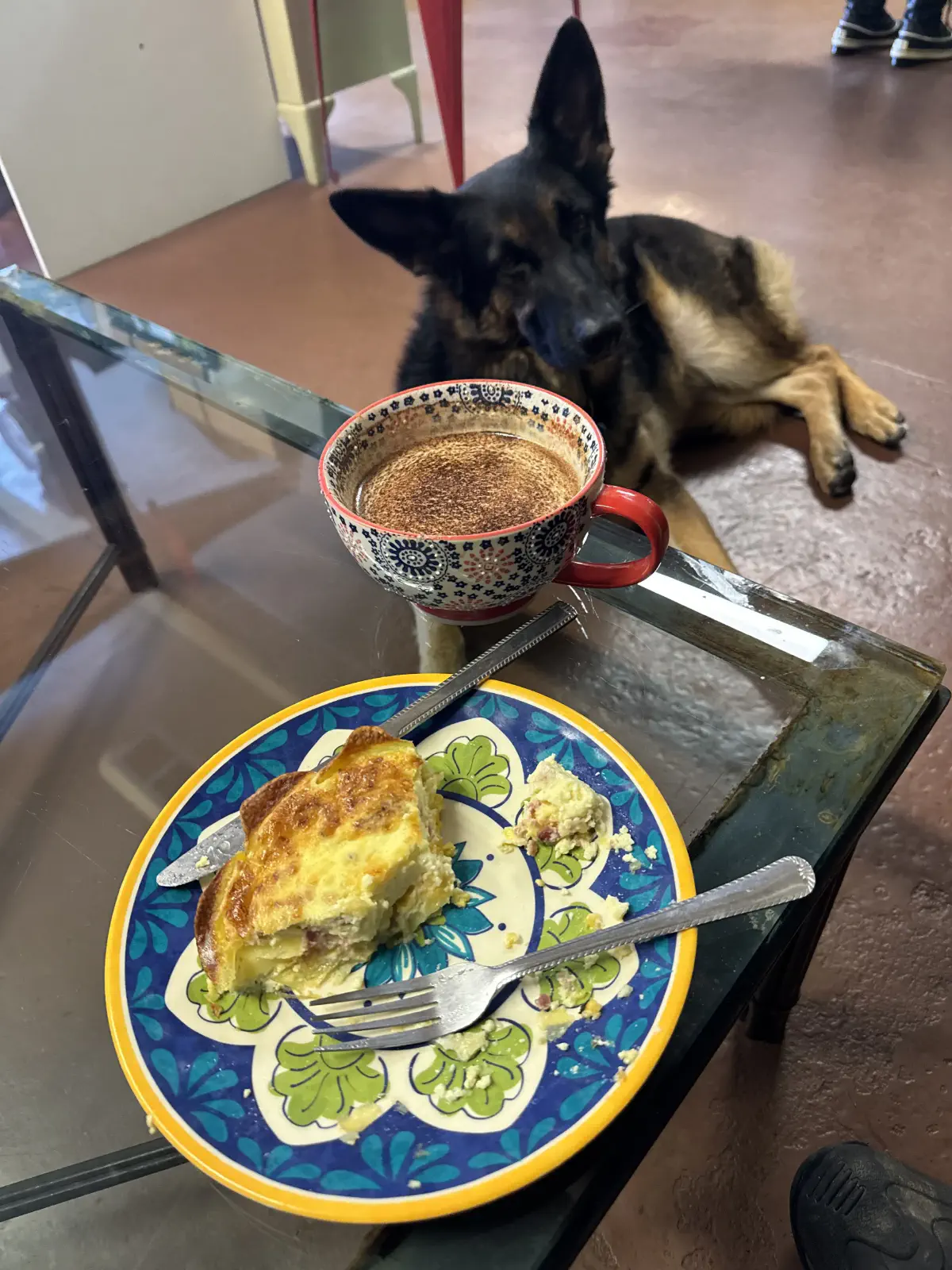
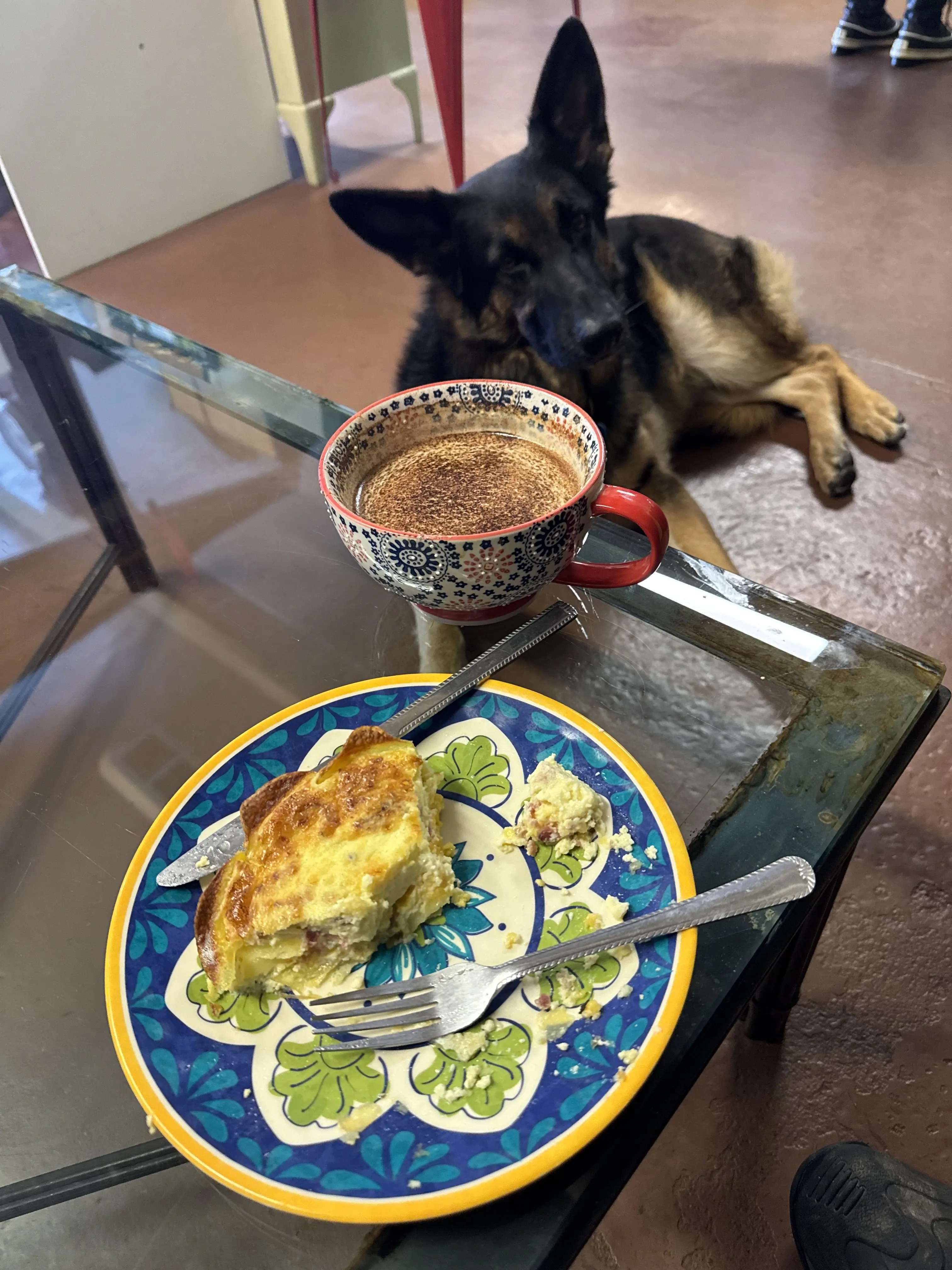
Last month the snow was still thick on the ground when Bella and I pushed through my favorite cafe, Brew Haha’s door.
Cold outside has a way of sharpening everything. The air bites your face. Boots crunch over frozen patches. The world feels slightly hostile, like winter is reminding everyone who’s in charge.
Then the door opens.
Warmth.
Steam.
The smell of coffee and baked things.
Human voices layered softly together.
Bella shook the snow from her fur like a small storm cloud collapsing. We grabbed our usual table, and for a moment I just sat there absorbing the transition—the thawing fingers, the sound of cups touching saucers, the quiet hiss of milk being persuaded into foam.
It felt unusually good to be there. Not just pleasant. Necessary.
Some days a café is just a café.
Other days it feels like a harbor.
Years ago I learned that the phrase “lattes and loitering” had a bit of cultural history attached to it. It popped up in the late 1990s and early 2000s during the first big wave of modern coffeehouse culture in the United States. The early days of the great espresso expansion—think the rise of places like Starbucks—when cafés were spreading through towns and college neighborhoods like caffeinated mushrooms after rain.
Not everyone was thrilled.
Critics—usually business owners, city officials, or the occasional newspaper columnist—used the phrase to complain about a certain new type of customer. The kind who would buy one latte, open a laptop or a book, and then occupy a table for what appeared to be three geological epochs.
From the perspective of a café owner trying to sell pastries and keep tables turning, this looked suspiciously like… loitering with milk foam.
From the perspective of the people at the tables, it looked like something else entirely.
It looked like the revival of an older tradition.
Coffeehouses have always been strange hybrid organisms. In 17th-century London they were sometimes called “penny universities.” Buy a cup of coffee for a penny and you could sit among merchants, poets, philosophers, and political agitators arguing about the fate of the world. Newspapers were born there. Financial markets emerged from conversations at those tables. Revolutions occasionally began with a cup.
A café, in that sense, is not really a store.
It’s a temporary civilization.
Which explains the tension that the phrase “lattes and loitering” was trying to describe. Two economic models occupying the same square footage.
One model says coffee is a retail product.
Drink it. Leave.
The other model says coffee is admission to a room where thinking is allowed to happen slowly.
I confess a deep fondness for the second model.
That snowy morning, Bella stretched out beside the table like she owned the place. Outside the window the street looked frozen and quiet, as if winter had paused the town for maintenance.
Inside, life continued.
Someone typing.
Someone laughing quietly.
Someone reading a book thick enough to stun a moose.
My coffee cooled at exactly the right speed for thinking.
Time does odd things in cafés. Five minutes becomes forty-five. You look up from a thought and realize you’ve been sitting there long enough to watch the room subtly change—new people arriving, others drifting away, the barista wiping the counter with that patient rhythm that says the day is unfolding exactly as expected.
It becomes very difficult to leave.
Which brings us back to the old accusation.
Loitering.
But cafés themselves seem to have made peace with the loiterers. Walk into most of them today and you’ll see power outlets tucked into walls, communal tables, Wi-Fi signals glowing like invisible campfires.
The ecosystem has adapted.
The loiterers, it seems, have won.
And perhaps that’s not such a bad outcome.
Civilization, at its best, might simply be people lingering in the same room long enough for ideas to bump into each other.
A latte helps.
Coming in from the cold helps even more.
Bella, for her part, seemed perfectly content with the arrangement.
She lounged.
I loitered. ☕