It happened.
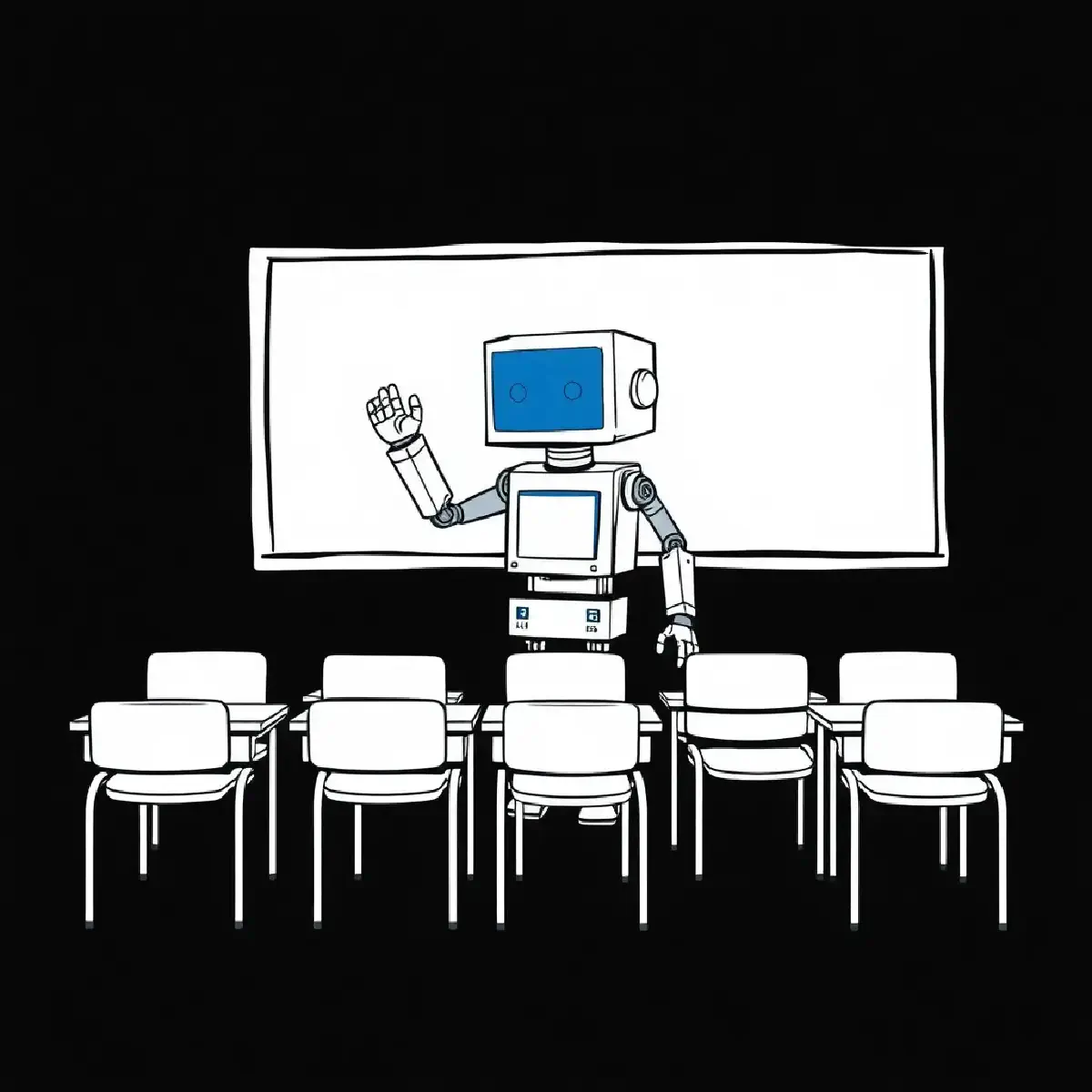
A robot — a Tesla Optimus, to be precise — walked into a classroom somewhere in America, flanked by cameras and the First Lady, and the whole thing was presented as a vision of the future of education.
The children looked uncertain. The robot looked like it was processing.
The photographers looked thrilled.
The premise, as best I can reconstruct it: robots in schools represent an investment in children’s futures. The subtext, which nobody said out loud: this is also a very good moment for a certain electric car company’s stock price.
To be fair, children are excited by novelty. A robot shows up and the lesson plan goes out the window — not because the robot is teaching anything, but because it’s a robot and it’s there and that’s more interesting than long division. I would have been excited too. I would have raised my hand immediately.
And that’s where it gets complicated.
Because when a kid raises their hand in a classroom — to answer a question, to ask one, or to request an urgent bathroom break — what they need is a person. Someone who reads the room. Someone who can tell the difference between I don’t understand this and I haven’t slept in two days.
A robot stares blankly at the raised hand and waits for further input.
Teachers do too, sometimes — but only because they’re managing thirty kids with thirty different needs on a budget that doesn’t cover enough pencils, let alone a $20,000 humanoid robot designed by a company whose CEO is currently dismantling the federal government.
Pushback Jack had some thoughts about all of this. Five pairs of them, in fact.
The cards write themselves when the gap between the photo op and the reality is this wide.
What kids need hasn’t changed: a warm body in the room who gives a damn.
The robot is optional.