One of my favorite ways to make history stick is to look for the hidden thread connecting distant events — not because it makes me a better historian, but because it gives me a story, and stories are how I remember things.
One way to connect distant historical moments is to stop looking at what people believed and instead ask: What problem were they trying to solve?
At first glance, 5th‑century B.C. Greek tragedy and the Enlightenment seem to belong to entirely different universes.
One gave us masked actors, doomed kings, angry gods, and choruses speaking in riddles.
The other gave us pamphlets, political philosophy, reason, science, and the dangerous idea that ordinary people might govern themselves.
Different centuries. Different tools. Different anxieties.
And yet both may have emerged from the same deep human need:
What do societies do when reality becomes too complicated, too painful, or too unstable to understand directly?
Athens Invents Emotional Infrastructure#
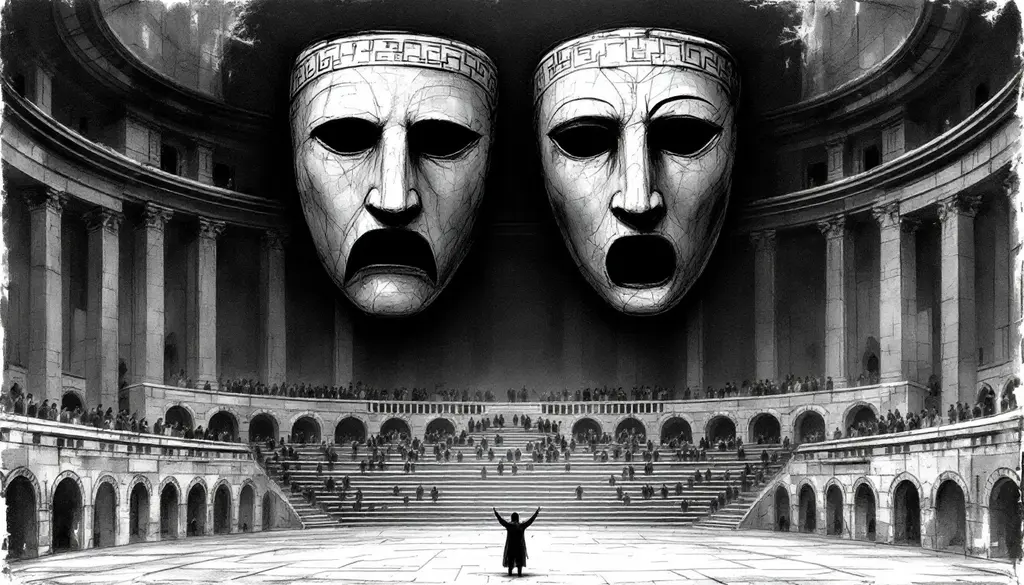
In Periclean Athens, tragedy was not just entertainment.
Citizens gathered in large public festivals to watch stories of suffering unfold on stage. Heroes failed. Families collapsed. Gods behaved irrationally. Fate mocked human effort.
Playwrights like Sophocles and Aeschylus didn’t offer solutions so much as emotional rehearsal.
The audience watched impossible situations play out safely at a distance.
A king learns too late.
A warrior cannot escape prophecy.
A family destroys itself through pride.
And afterward, people went home.
The Greeks called this catharsis — emotional release through witnessing.
In a culture where gods could be arbitrary and life was fragile, tragedy functioned almost like civic maintenance.
A society under stress built a ritualized space to process grief, uncertainty, guilt, and fear.
You could argue that Athens invented a kind of psychological plumbing.
Instead of pretending suffering didn’t exist, they staged it publicly.
The Enlightenment: A Different Kind of Theater#
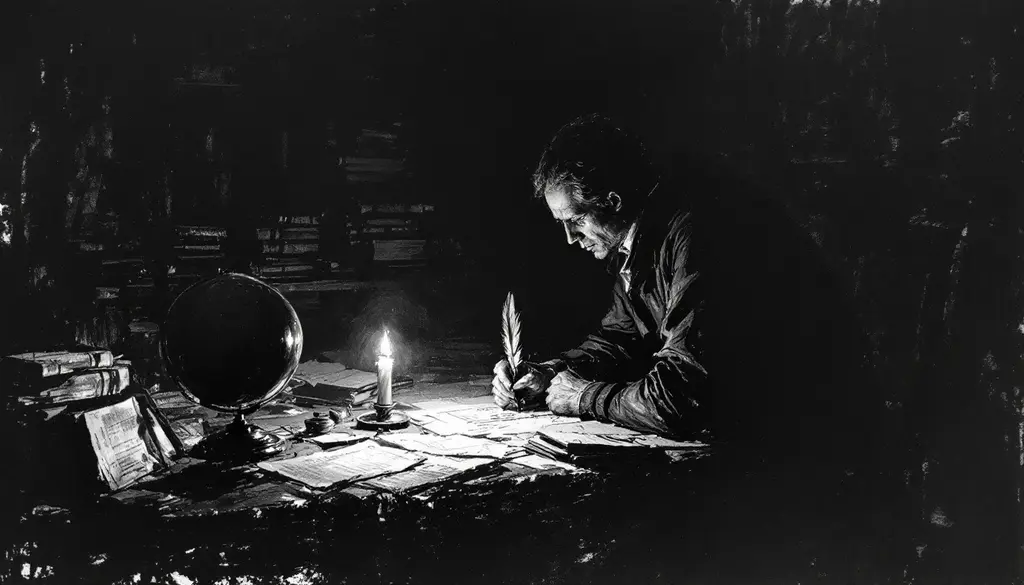
Fast‑forward two thousand years.
Europe is no longer trying to understand capricious gods.
Now it is trying to understand kings.
Empires are overstretched. Wars are expensive. Trade routes connect continents. Old institutions still hold power, but the intellectual weather is changing.
The Enlightenment did not begin as a revolution.
It began as a conversation.
Thinkers asked dangerous questions:
- Why should authority be inherited?
- What gives governments legitimacy?
- Do individuals possess rights simply by being human?
- What happens when institutions stop making sense?
These ideas circulated quietly for decades.
Then pressure built.
War debt mounted. Royal treasuries weakened. Colonies demanded more autonomy. Information traveled faster than before.
Philosophy met crisis.
And once again, society needed a pressure valve.
Tragedy and Revolution as Social Release#
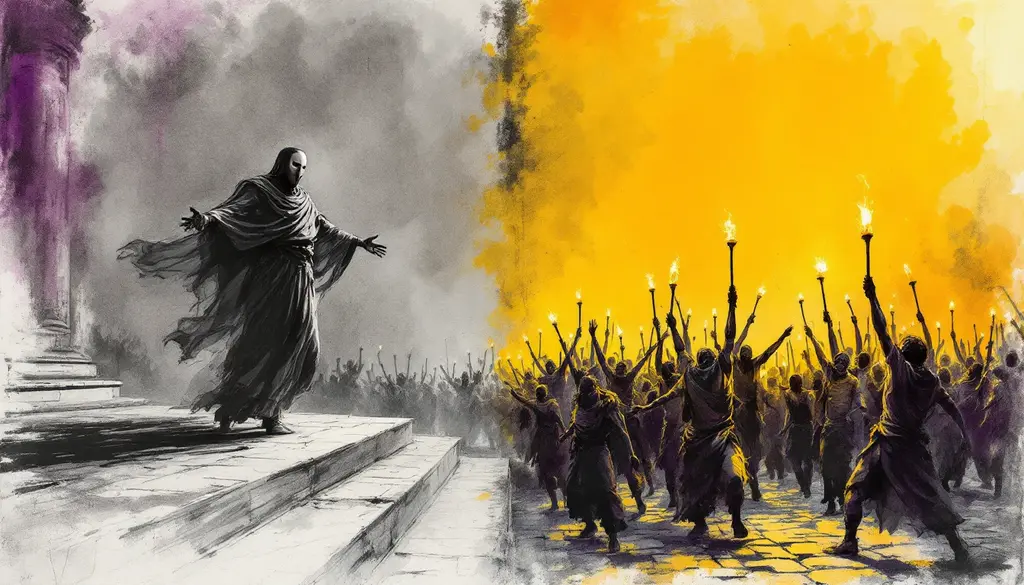
Perhaps tragedy and revolution serve similar purposes.
Greek tragedy allowed people to confront unbearable truths symbolically.
Political revolution allowed people to confront unbearable truths structurally.
One happens on stage.
The other happens in the streets.
But both emerge when a society becomes emotionally or intellectually overpressurized.
The Greeks processed contradiction through story.
The Enlightenment processed contradiction through argument.
Both ask a version of the same question:
What do we do when the old explanations no longer work?
Maybe History Repeats Not Through Events — But Through Needs#
We often think of history as a sequence of inventions.
Agriculture. Democracy. Steam engines. Constitutions.
But maybe history is also a sequence of recurring emotional problems.
Humans repeatedly reach moments where the world becomes too confusing for the stories they inherited.
When that happens, societies improvise.
Athens built tragedy.
The Enlightenment built political philosophy.
Both may have been attempts to metabolize uncertainty.
Not answers.
Just methods of survival.
On the other hand, Jack has a pushback (for me) on this thesis: