Ten seconds.
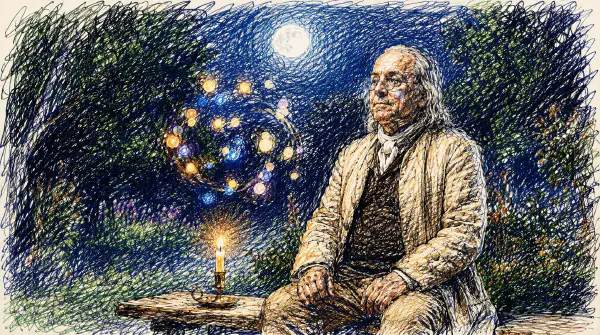
That’s what Google Flow gave me for Franklin in the garden. He sits down, the lights start to drift in, and then — nothing. Clip’s over. Whatever happens next has to happen in a new generation, with no guarantee the light is the same amber, no guarantee Franklin’s spectacles catch the moonlight the same way twice.
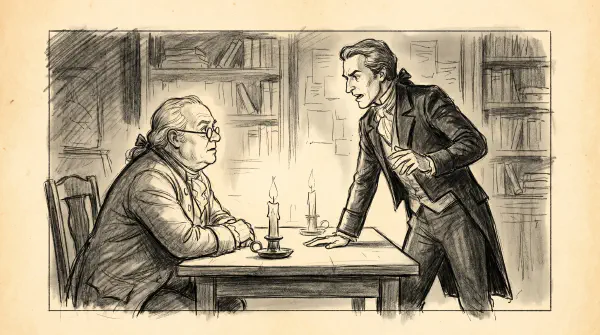
Overview # A one-act play, written with my friend Ed Gehrman, and with a nod to Arthur Young, being produced as an AI-generated film — theatrical staging, not cinema. Play One of a series called The Messengers.
Ed Gehrman lives in Quincy, California.
Not the Massachusetts one. The Northern California one — small enough that the coffee shop remembers your order, high enough in the Sierra Nevada foothills that the air still smells like pine sap in May.
You’re sitting in your favorite café.
The kind with mismatched chairs and a shelf of lending library books near the door — dog-eared paperbacks, a few hardcovers with cracked spines, the occasional journal nobody claimed.
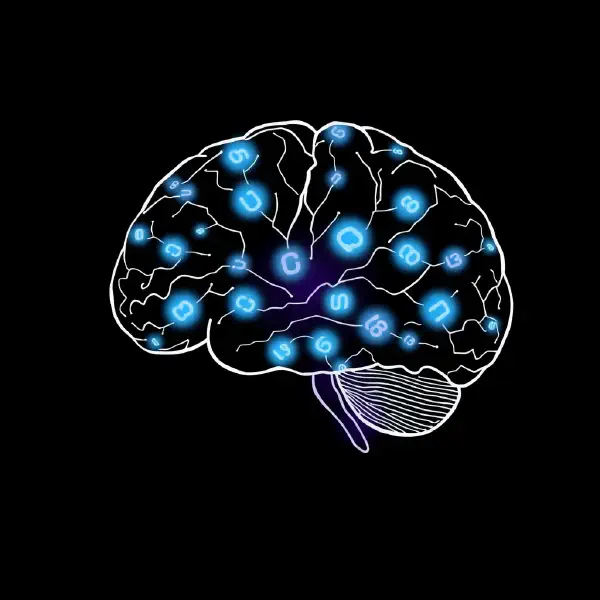
The numbers appear on the screen.
Five of them. Then they’re gone.
Three seconds. That’s all you get.
Then a joke shows up — something about a bear with no teeth or a seafood diet — and by the time you’ve read it and smiled (or groaned), the numbers feel like they belonged to someone else.
Overview # Every field has its dogmas — the confident claims that get repeated until they feel like facts. Pushback Jack is a video series dedicated to poking holes in them.
Two sketches had been sitting on my desktop for months — separately, doing nothing.
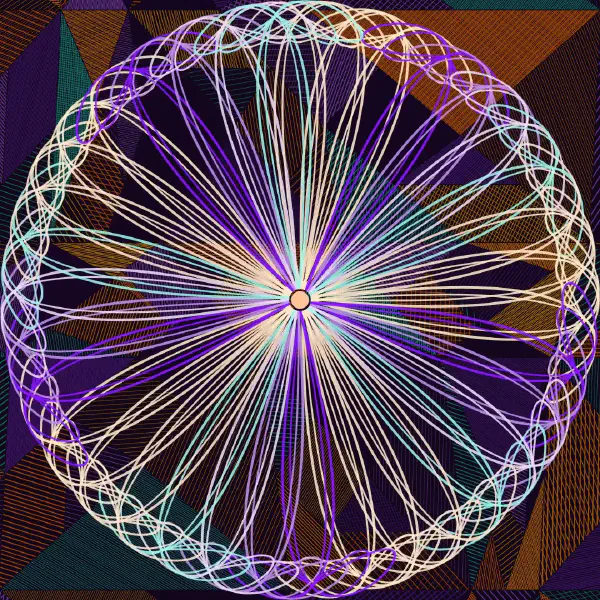
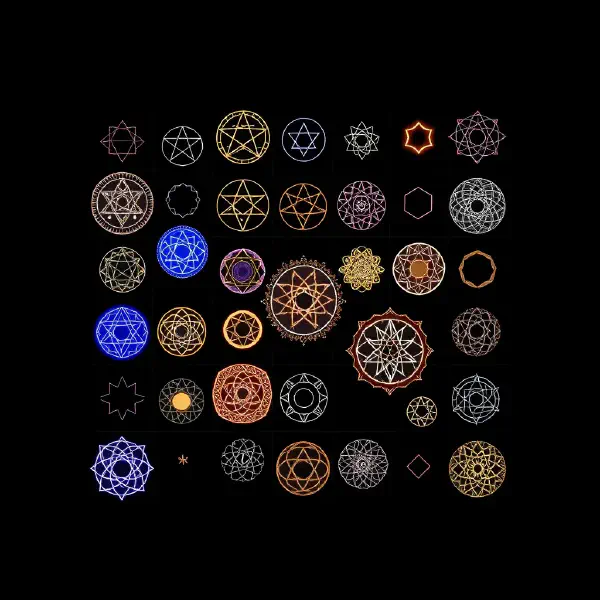
One generates rugs: deformed tangram grids, each cell filled with hatching, colors drawn from a random palette, tile edges warped by a slow sine function so the grid breathes instead of sitting still. The other draws mandalas: radial curves that follow the mouse, a handful of parameters controlling how the arms splay and bend and spread.
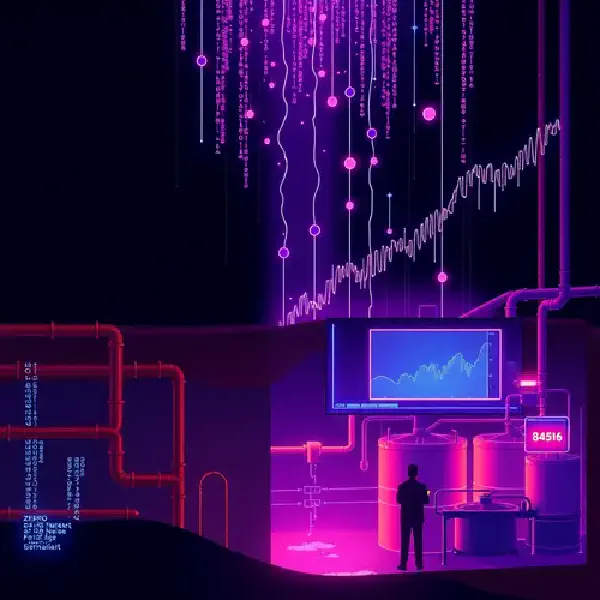
The CDC has been tracking COVID-19 by measuring RNA concentrations in sewage.
No, really. Public health departments collect wastewater from treatment plants, test it for SARS-CoV-2 genetic material, and publish the data. The idea is that people shed the virus in stool days before symptoms show up — which means wastewater is an early warning system that doesn’t depend on anyone getting tested.
In Is Generative Art Now Quaint? I ended with a question dressed up as a statement: I’m genuinely curious what’s possible now.
This one starts with a failed project.
A while back I wrote about MAGA Mick — a cartoon character I was building in CreateStudio4. A flannel-wearing Republican voter, slowly reckoning with the gap between what he’d been told and what he was seeing. Satirical cards, one after the other. The premise was solid. The execution? Brutal.